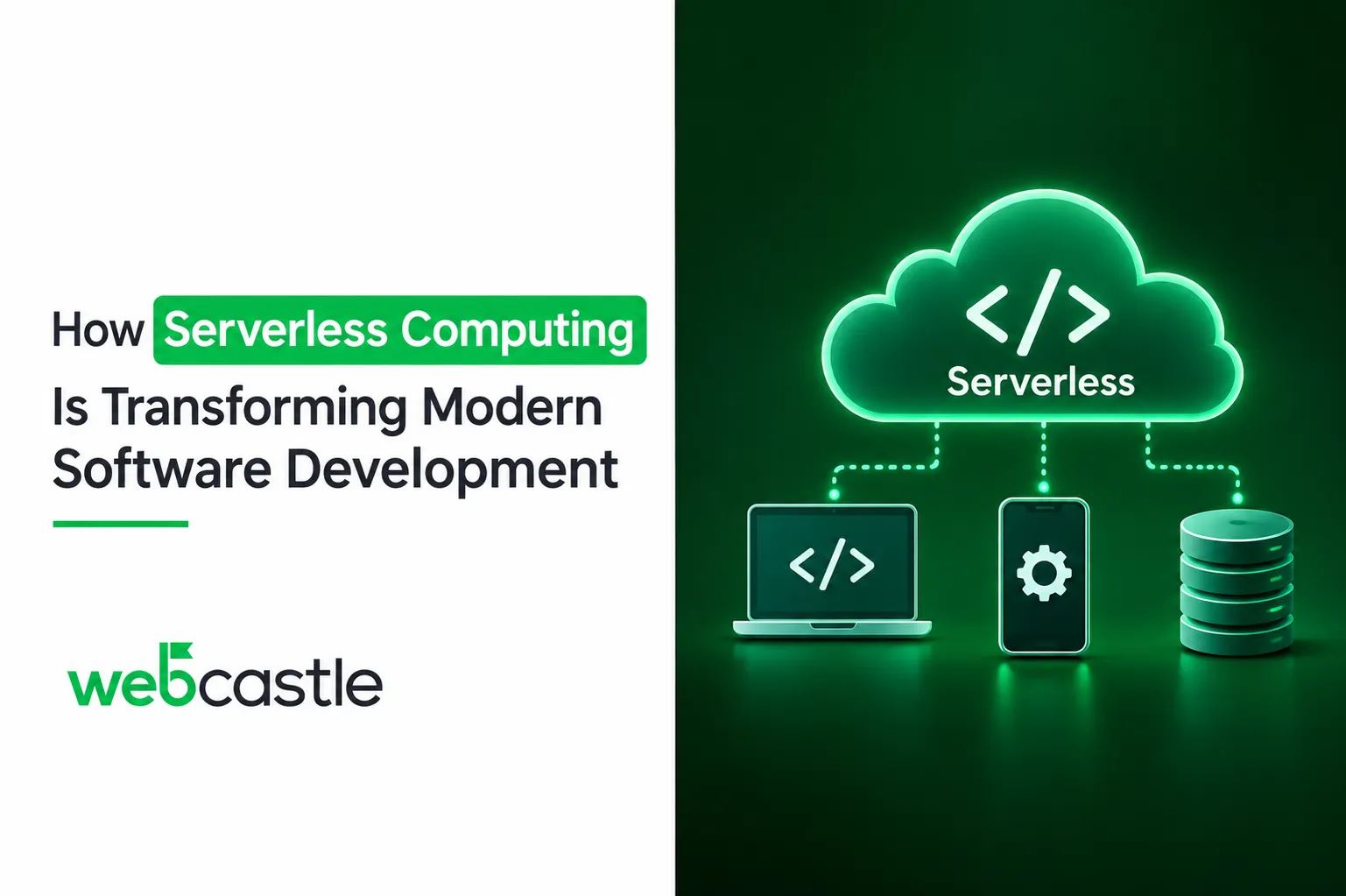
Serverless computing is changing how businesses build, deploy and manage software applications. It allows development teams to run application code without managing the underlying server infrastructure. Cloud providers handle server management, resource allocation and automatic scaling, while developers focus on building and improving applications.
For businesses with changing traffic levels, serverless computing can reduce infrastructure management and help control computing costs. However, it is not always the most cost-effective option, particularly for applications that handle heavy workloads continuously.
Before choosing serverless architecture, businesses need to understand how their applications use computing resources, what performance they require and how their systems will recover from unexpected disruptions.
This guide explains how serverless computing works, its benefits and limitations, common applications, and the factors businesses should consider before adopting it.
What Is Serverless Computing?
Serverless computing is a cloud-based development approach that allows developers to run application code without managing physical servers or virtual machines. The cloud provider takes responsibility for infrastructure management, server maintenance and resource allocation.
Developers can write and deploy individual functions that run when specific events occur, such as an API request, a file upload or a scheduled task.
Unlike traditional server hosting, where businesses often pay for provisioned resources even when they are not fully used, serverless platforms commonly charge based on the resources consumed during execution. Other services, such as databases, storage and API gateways, may have separate charges.
Popular serverless platforms include:
- AWS Lambda: Runs code in response to events without requiring developers to manage servers.
- Microsoft Azure Functions: Allows developers to execute code based on events and application activities.
- Google Cloud Run functions: Supports event-driven functions without requiring infrastructure management.
These platforms help development teams build and operate applications while reducing the time spent managing server infrastructure.
How Does Serverless Architecture Work?
Serverless architecture uses cloud-managed infrastructure to execute application code when an event occurs. Instead of keeping a server running continuously, the platform provides computing resources when required.
The process generally involves four steps:
- An event triggers the function: An event could be an API request, a database update, a file upload or a scheduled task.
- The platform prepares the execution environment: The cloud provider creates or reuses an environment to run the application code.
- The function executes: The application processes the request and returns the required result.
- The environment becomes available for reuse: The platform may retain the execution environment temporarily for future requests or remove it when it is no longer needed.
One important concept in this process is a cold start. When a new execution environment needs to be prepared, the platform must initialise the runtime and load the required code before executing the function. This can add some delay to the first request.
When an existing environment is reused, the application can often respond faster because the initial setup has already been completed.
Key Technologies Powering Serverless Computing
Several cloud technologies work together to support serverless application development.
Function as a Service (FaaS)
FaaS allows developers to run individual functions in response to specific events without managing servers. AWS Lambda and Azure Functions are common examples. It is useful for tasks such as processing requests, handling notifications and automating workflows.
Backend as a Service (BaaS)
BaaS provides managed backend services such as authentication, databases, file storage and user management. It reduces the need to build and maintain every backend component from scratch.
API Gateways
API gateways manage communication between applications and backend services. They receive API requests, route them to the appropriate functions and help manage authentication and request handling.
Event-Driven Architecture
Event-driven architecture allows applications to respond automatically to activities such as new orders, payment confirmations, database updates and file uploads.
Managed Cloud Databases
Managed databases allow applications to store and retrieve information without requiring businesses to manage the underlying database infrastructure.
Together, these technologies help developers build applications using independent services that can be updated and scaled according to their requirements.
How Serverless Computing Is Transforming Modern Software Development
Serverless computing changes how development teams build, deploy and maintain applications. It reduces some infrastructure responsibilities and gives developers more flexibility when managing application workloads.
Here are some of its key contributions to modern software development.
1. Faster Application Development and Deployment
Serverless computing reduces the need to configure and maintain servers before deploying application code. Developers can focus on writing functions and building application features instead of spending significant time preparing infrastructure.
Individual functions can also be updated without redeploying an entire application, provided the architecture is designed to support independent deployment.
This can help development teams test new features, fix issues and release updates more efficiently.
2. Automatic Scaling Based on Application Demand
Applications often experience changes in traffic depending on business activities, marketing campaigns and customer demand.
Traditional server environments may require developers to configure additional resources to handle sudden increases in traffic.
Serverless platforms can automatically create additional execution environments when more requests arrive, subject to account quotas and service limits.
This makes serverless architecture useful for applications such as eCommerce platforms, booking systems and online services that experience changing traffic levels.
3. Reduced Infrastructure Management
Managing servers involves several responsibilities, including software updates, operating system maintenance, infrastructure monitoring and capacity planning.
With serverless computing, the cloud provider manages much of the underlying infrastructure.
This allows development teams to spend more time improving application functionality, fixing software issues and developing new features.
However, businesses still need to manage application security, permissions, monitoring, deployment and cloud resource configuration.
4. Cost Optimisation Through Usage-Based Pricing
Serverless platforms generally charge businesses based on factors such as the number of function executions, execution duration and allocated resources.
This can reduce computing costs for applications that receive occasional requests or experience unpredictable traffic.
For example, a business application that processes customer requests only during working hours may benefit from paying for actual execution rather than maintaining dedicated computing capacity throughout the day.
However, serverless is not automatically cheaper. Applications with continuous, high-volume workloads may cost less to operate on dedicated servers or containers. Businesses should compare the total cost of infrastructure, storage, data transfer and managed services before making a decision.
5. Better Integration with APIs and Microservices
Modern applications often depend on multiple services to handle different operations.
Serverless functions can connect these services through APIs and event-driven communication. Developers can create separate functions for tasks such as processing payments, retrieving customer information and updating inventory.
This makes it easier to maintain individual application components and integrate third-party platforms.
For businesses connecting different software systems, well-planned API integration services can help applications exchange information and automate routine operations.
6. Support for Event-Driven Applications
Serverless computing works well with applications that perform tasks when specific events occur.
For example, when a customer uploads a document, a serverless function can automatically process the file, store the results and send a notification.
This approach is useful for automating business processes without keeping dedicated computing resources active for every task.
7. Greater Flexibility for Development Teams
Serverless architecture allows developers to select different functions and managed services based on application requirements.
Teams can update individual components, integrate cloud services and experiment with new application features without managing an entire server environment.
This flexibility can be particularly useful for startups and businesses developing new digital products.
Common Use Cases of Serverless Computing
Serverless computing supports several types of applications across different industries.
Here are some common examples.
Web Application Development
Serverless functions can manage backend operations such as processing form submissions, handling user requests and retrieving information from databases.
eCommerce Platforms
Online stores can use serverless functions to process orders, update inventory, send order notifications and handle payment-related events.
Real-Time Data Processing
Businesses can process incoming data from applications, devices and other systems whenever new information becomes available.
AI-Powered Applications
Serverless functions can connect applications with AI APIs, process user requests and manage automated workflows. They can also handle supporting tasks around AI-powered applications.
File and Document Processing
When users upload images, videos or documents, serverless functions can automatically resize files, extract information and organise stored content.
Mobile Application Backends
Mobile applications can use serverless functions to handle authentication, notifications, API requests and other backend operations.
Serverless Computing vs Traditional Server-Based Development
Both serverless computing and traditional server-based development support application hosting and software deployment. However, they differ in how infrastructure is managed, how resources are allocated and how businesses pay for computing services.
| Comparison Factor | Serverless Computing | Traditional Server-Based Development |
|---|---|---|
| Infrastructure | Managed by the cloud provider | Managed by the business or hosting provider |
| Pricing | Generally based on execution and resource usage | Usually based on provisioned capacity |
| Idle Resources | Lower idle compute costs for suitable workloads | May incur costs even when resources are unused |
| Scaling | Automatic, subject to service limits | Requires configuration and capacity planning |
| Maintenance | Provider manages underlying infrastructure | More server maintenance responsibilities |
| Deployment | Functions or services can be deployed independently | Often involves deploying applications or services |
| Execution Time | Subject to platform-specific limits | Depends on server configuration |
| Portability | May depend on provider-specific services | Can offer more infrastructure flexibility |
| Best Suited For | Event-driven and variable workloads | Continuous and predictable workloads |
The right choice depends on application requirements, expected traffic, performance needs and operating costs.
Challenges and Limitations of Serverless Computing
Although serverless computing offers several advantages, businesses should understand its limitations before adopting it.
Cold Starts and Application Response Times
When a cloud platform creates a new execution environment, the initialisation process can increase response times. This is known as a cold start.
For applications that require consistent response times, developers can use techniques such as reducing function dependencies, optimising code and configuring provisioned concurrency where supported.
AWS Lambda also offers SnapStart for supported runtimes to reduce initialisation delays.
Execution Time and Resource Limits
Serverless platforms have limits on execution duration, memory and concurrent requests.
For example, a standard AWS Lambda function can run for a maximum of 15 minutes per invocation, with memory configurations ranging from 128 MB to 10,240 MB.
Applications that require longer processing times may need to use other cloud services or divide tasks into smaller operations.
Debugging and Monitoring Complexity
Serverless applications often consist of multiple independent functions and managed services.
When an error occurs, identifying its source can become difficult because a single request may pass through several components.
Developers need proper logging, monitoring and distributed tracing to identify issues and understand application performance.
Vendor Lock-In
Serverless applications may depend on cloud provider-specific services, APIs and configurations.
Moving an application to another provider may require changes to its functions, integrations and deployment processes.
Businesses should consider portability and long-term cloud requirements when selecting a serverless platform.
Cost Management for High-Volume Applications
Serverless pricing can become expensive when applications process a large number of requests continuously.
For workloads with predictable and consistent demand, dedicated servers or container-based infrastructure may provide better cost control.
A detailed cost comparison is important before choosing an architecture.
Cloud Region Availability and Data Protection
Serverless applications depend on cloud infrastructure, making disaster recovery and data protection important considerations.
In March 2026, AWS reported significant infrastructure disruptions in its Middle East (UAE) Region following physical damage to facilities. Subsequent AWS updates in September 2026 stated that access to resources and data hosted exclusively in one affected Availability Zone could not be restored.
This incident highlights why businesses should not depend entirely on a single cloud Availability Zone or assume that regional infrastructure will always remain available.
For UAE businesses, disaster recovery planning should include remote backups, alternative deployment options and tested recovery procedures.
Data location also requires attention. The UAE Personal Data Protection Law (Federal Decree-Law No. 45 of 2021) sets conditions for processing and transferring personal data across borders. Certain regulated industries may also have additional requirements.
Businesses should review applicable data protection and industry-specific regulations before choosing cloud hosting locations.
Best Practices for Implementing Serverless Architecture
A well-planned serverless architecture can improve application management and reduce unnecessary infrastructure costs.
Consider the following practices when implementing serverless solutions:
- Design functions for specific tasks: Keep functions focused on individual operations to make them easier to test and maintain.
- Optimise resource allocation: Test different memory configurations and execution settings to balance performance and cost.
- Set appropriate timeouts: Configure execution limits based on the expected processing time of each function.
- Implement strong security controls: Use appropriate authentication, permissions and access policies to protect application data.
- Monitor application performance: Set up logging, monitoring and tracing to identify errors and performance issues.
- Manage cloud spending: Configure budget alerts and regularly review usage and billing reports.
- Plan for disaster recovery: Maintain backups in alternative locations and test recovery procedures.
- Choose the right architecture: Evaluate whether serverless, containers or traditional hosting is better suited to the application’s workload.
For additional cost management guidance, read WebCastle’s guide on How AWS Helps Businesses Reduce Cloud Computing Costs in 2026.
Is Serverless Computing the Right Choice for Your Business?
Serverless computing can be a suitable option for businesses that need flexible infrastructure, automatic scaling and reduced server management.
It works particularly well for applications with unpredictable traffic, event-driven operations, occasional background tasks and smaller development teams.
However, applications with continuous heavy workloads, long-running processes or strict performance requirements may benefit more from traditional server hosting or container-based infrastructure.
Before choosing serverless computing, businesses should evaluate:
- Expected application traffic and usage patterns.
- Computing and infrastructure costs.
- Application performance and response time requirements.
- Security and data protection requirements.
- Cloud provider limitations and service availability.
- Backup and disaster recovery requirements.
For businesses planning new applications or upgrading existing systems, working with an experienced development team can help identify the right technology and architecture.
As a custom web development company in Dubai, WebCastle Technologies has been developing websites and applications since 2008. The team works on custom web development and application solutions based on business requirements, application functionality and technical needs.
The right development approach should support your business operations, manage expected workloads and provide room for future growth.
Conclusion
Serverless computing is changing modern software development by reducing infrastructure management, supporting automatic scaling and allowing developers to focus on application functionality.
It can be a practical solution for businesses with variable workloads and event-driven applications. However, factors such as execution limits, cloud costs, security and regional availability should be considered before implementation.
Choosing the right architecture requires a clear understanding of your application’s requirements and long-term business goals.
If you are planning a new web application or considering an upgrade to your existing software, contact WebCastle to discuss your development requirements.
Frequently Asked Questions
1. What is serverless computing in software development?
Serverless computing is a cloud-based approach that allows developers to run application code without managing the underlying server infrastructure. Cloud providers handle server management and resource allocation, while developers focus on building and maintaining applications.
2. How does serverless architecture work?
Serverless architecture executes application code when specific events occur, such as API requests, file uploads or database updates. The cloud provider manages the required computing resources and charges based on usage.
3. What are the main benefits of serverless computing?
The main benefits include reduced infrastructure management, automatic scaling, usage-based pricing, faster deployment and easier integration with APIs and cloud services.
4. Is serverless computing cheaper than traditional cloud hosting?
Serverless computing can be more cost-effective for applications with irregular or unpredictable workloads because businesses pay for the resources they use. However, traditional hosting may be cheaper for applications with continuous, high-volume traffic.
5. What are the popular serverless computing platforms?
Popular platforms include AWS Lambda, Microsoft Azure Functions and Google Cloud Run functions. They allow developers to run application code without directly managing server infrastructure.
6. Is serverless computing suitable for enterprise applications?
Yes. Serverless computing can support enterprise applications, including data processing, APIs, automation and application backends. However, businesses must evaluate security, performance, integration, compliance and disaster recovery requirements before implementation.
7. What is the difference between serverless and microservices architecture?
Serverless is a cloud computing model in which the provider manages the infrastructure required to execute application code. Microservices is an application design approach that divides software into smaller, independently managed services. A microservices application can use serverless functions, containers or traditional servers.