


Mobile apps have gone through a lot of makeovers over the past decade — better design, faster load times, smarter recommendations. But 2026 marks a different kind of shift. This time, apps aren’t just getting prettier or quicker. They’re getting agentic — able to think through a task, make a decision, and act on it, without a person tapping every step of the way.
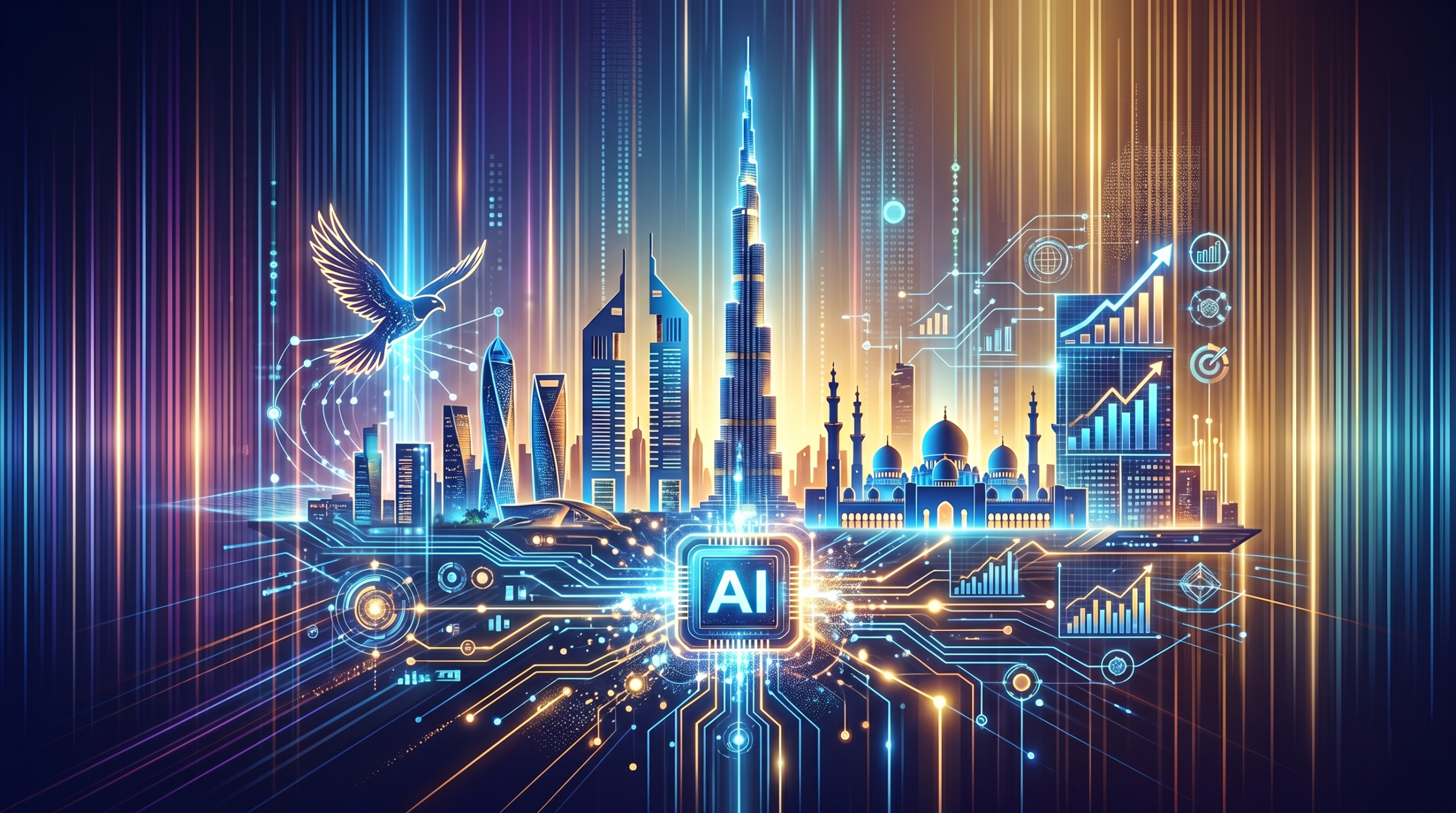
According to the Microsoft AI Economy Institute’s Q1 2026 Global AI Diffusion Report, the UAE now leads the world in AI adoption, with 70.1% of its working-age population using AI tools — up from 64% just two quarters earlier, and well ahead of second-placed Singapore. Separate research from Stanford’s AI Index puts UAE generative AI adoption above 54%, with more than 80% of employees in the country regularly using AI at work. This isn’t a coincidence. It’s the outcome of a policy journey that began in 2017, when the UAE became the first country in the world to appoint a Minister of State for Artificial Intelligence, and it’s now showing up directly in how people expect their apps to behave.
For businesses building or investing in mobile products, this creates both an opportunity and a bit of pressure. Users in the region aren’t just AI-curious anymore — they’re AI-fluent, and their expectations are rising fast. AI agents are becoming the feature that separates an app people tolerate from one they actually rely on.
What Are AI Agents?
It helps to start with a clear line between two things that often get lumped together: chatbots and AI agents.
A chatbot is reactive. You ask it something, it replies. It can hold a conversation, answer FAQs, maybe even sound fairly natural — but it’s still waiting for your next message before it does anything.
An AI agent is different. It can understand a goal, break it into steps, decide what to do, take action inside the app or across connected systems, and then check whether the outcome was correct — adjusting if it wasn’t. In practice, that means an agent doesn’t just tell you your flight is delayed. It rebooks you on the next available one, updates your calendar, and notifies whoever’s picking you up, all in one uninterrupted sequence.
This capability comes from four components working together:
- A perception layer — understanding input, whether it’s typed text, voice, or app activity
- A reasoning engine — usually a large language model that plans what to do next
- A memory system — short- and long-term context, so the agent remembers your preferences and past interactions
- An action layer — the APIs, device functions, and third-party integrations the agent uses to actually get things done
Put together, this loop — observe, plan, act, and reflect — is what allows an AI agent to behave less like a feature and more like a coworker who happens to live inside your phone.
How AI Agents Are Transforming Mobile Applications
1. Personalized User Experiences
AI agents don’t just recommend a product or a playlist based on your last search. They watch behavior over time — how long you linger on a screen, what you skip, what time of day you’re most active — and adjust the interface itself, not just the content inside it. A shopping app might quietly rearrange its homepage for a bargain hunter versus a brand loyalist. A fitness app might notice rising stress signals from a connected wearable and shift the day’s plan before you even open the app.
2. Intelligent Virtual Assistants
The assistants built into apps today can hold context across an entire conversation — and across sessions. They remember what you asked last week, understand follow-up questions without you repeating yourself, and can manage genuinely useful tasks: setting reminders, organizing a to-do list, drafting a message, or pulling together a summary of your week. This is a long way from the keyword-matching chat widgets of a few years ago.
3. Automated Workflows
This is where agents deliver the most obvious return on investment for businesses. Manual, repetitive processes — approvals, data entry, status updates, routing — can now run inside the app with minimal human oversight. An expense app that scans a receipt, categorizes it, attaches it to the right project, and submits it for approval is a simple but telling example. Multiply that across HR, logistics, or field service, and the time savings compound quickly.
4. Enhanced Customer Support
Support inside mobile apps is increasingly agent-led rather than ticket-led. Instead of routing every query to a human, agents resolve account issues, process refunds, or troubleshoot common problems end-to-end, escalating to a person only when the situation genuinely needs one. The result is 24/7 availability with resolution times that used to require a live agent on the other end.
5. Predictive Analytics and Decision-Making
Rather than waiting for a user to search or ask, agents increasingly anticipate the need itself. Streaming apps suggest content based on mood and viewing patterns. Retail apps surface products before a shopper starts typing. Health apps flag a concerning trend in vitals before a user notices anything is wrong. The main shift is from “the app responds” to “the app gets ahead of you.”
6. Smarter Ecommerce and Fintech Apps
In ecommerce, agents are powering dynamic, individualized shopping journeys — adjusting recommendations, pricing displays, and even checkout flows based on real-time signals. In fintech, agents are doing heavier lifting: monitoring transactions continuously, flagging fraud in real time, and offering genuinely useful financial guidance based on spending patterns rather than generic tips. Given the UAE’s fast-growing fintech and digital banking sector, this is one of the areas where agentic AI is having the most visible commercial impact.
7. Voice and Multimodal Interactions
Modern AI agents in mobile apps are increasingly built to handle voice, text, and visual input together — and to switch between them naturally. They can process regional dialects and slang, hold multi-turn conversations without losing context, and move fluidly between languages, which matters enormously in a market as linguistically diverse as the UAE.
Benefits of AI Agents in Mobile Applications
- Increased user engagement — apps that anticipate needs keep people coming back more often
- Improved operational efficiency — automated workflows cut down on manual overhead and human error
- Higher customer retention — faster resolutions and personalized experiences build loyalty
- Better business insights — agents generate structured data on user behavior that feeds directly into decision-making
Challenges and Considerations
Agentic AI isn’t a plug-and-play upgrade, and it comes with real trade-offs businesses need to plan for.
Data privacy and security. Agents often need access to sensitive data — financial details, health information, location — to do their job well. That raises the stakes on how data is stored, processed, and protected, especially under frameworks like the UAE’s data protection regulations, which increasingly assume privacy-first architecture and on-device processing as a baseline rather than an add-on.
AI accuracy and transparency. An agent that drafts an email and gets something wrong is forgiving. An agent that moves money, books an appointment, or denies a claim needs to be reliable, auditable, and correctable. Businesses need to build in observability — logs, retries, and human override options — from day one.
Ethical use of artificial intelligence. As agents take on more autonomous decision-making, questions about bias, consent, and accountability become harder to sidestep. Clear governance isn’t optional if a business wants to scale agentic features responsibly.
The Future of AI-Powered Mobile Applications in the UAE
The trajectory here is unusually clear. The UAE Cabinet announced in April 2026 a world-first framework to deploy agentic AI across 50% of government sectors, services, and operations within two years — a signal that autonomous digital assistants are moving from consumer novelty to national infrastructure. The country already runs the world’s first AI-powered Proactive Government Performance System, tracking more than 150 million data points a month.
That kind of top-down commitment tends to accelerate private-sector adoption too. Expect to see:
- Autonomous digital assistants becoming standard in banking, healthcare, retail, and government service apps
- Broader adoption across industries that have historically been slower movers, like real estate and logistics
- AI agents shifting from a differentiating feature to a baseline expectation in next-generation mobile apps
Why Businesses Should Invest in AI-Powered Mobile Apps
User expectations have moved faster than most product roadmaps. With AI adoption in the UAE now the highest in the world, users increasingly assume intelligent, adaptive experiences as the default — not the exception. Businesses that treat agentic AI as a core part of the roadmap, rather than a bolt-on feature, are the ones building a real competitive advantage: faster resolution times, stickier engagement, and operational costs that scale more efficiently than headcount.
Getting there, though, depends on choosing the right development partner. WebCastle Technologies, mobile app development agency in Dubai, develops intelligent, scalable mobile applications built with exactly this kind of forward-looking architecture in mind. For businesses in the UAE weighing how to compete in an AI-first market, the right mobile app development partner can support long-term growth , turning agentic AI from a buzzword into a working part of the product.
The Future of Mobile Apps Is Agentic
The pattern across every sector — fintech, healthcare, retail, government — is the same. AI agents are reshaping how users interact with mobile applications, moving the relationship from “app as a tool you operate” to “app as an assistant that works alongside you.” Businesses that adopt AI-driven experiences early aren’t just keeping up with user expectations; they’re positioning themselves to unlock genuinely new categories of growth and innovation, particularly in a market like the UAE where the appetite for AI is already ahead of the rest of the world.
FAQs
1. What is an AI agent in a mobile application?
An AI agent is a system built into a mobile app that can understand a goal, reason through the steps needed to achieve it, take action using app functions or external services, and check the outcome, largely without step-by-step human input.
2. How are AI agents different from chatbots?
Chatbots respond to questions within a conversation. AI agents go further: they can plan multi-step tasks, take real actions (like booking, rerouting, or approving something), and adapt based on results, rather than just generating a reply.
3. Are AI agents secure for mobile applications?
They can be, provided they’re built with privacy-first design, on-device processing where possible, and strong governance around data access, transparency, and human oversight. Security depends heavily on how the agent is architected, not on the presence of AI itself.