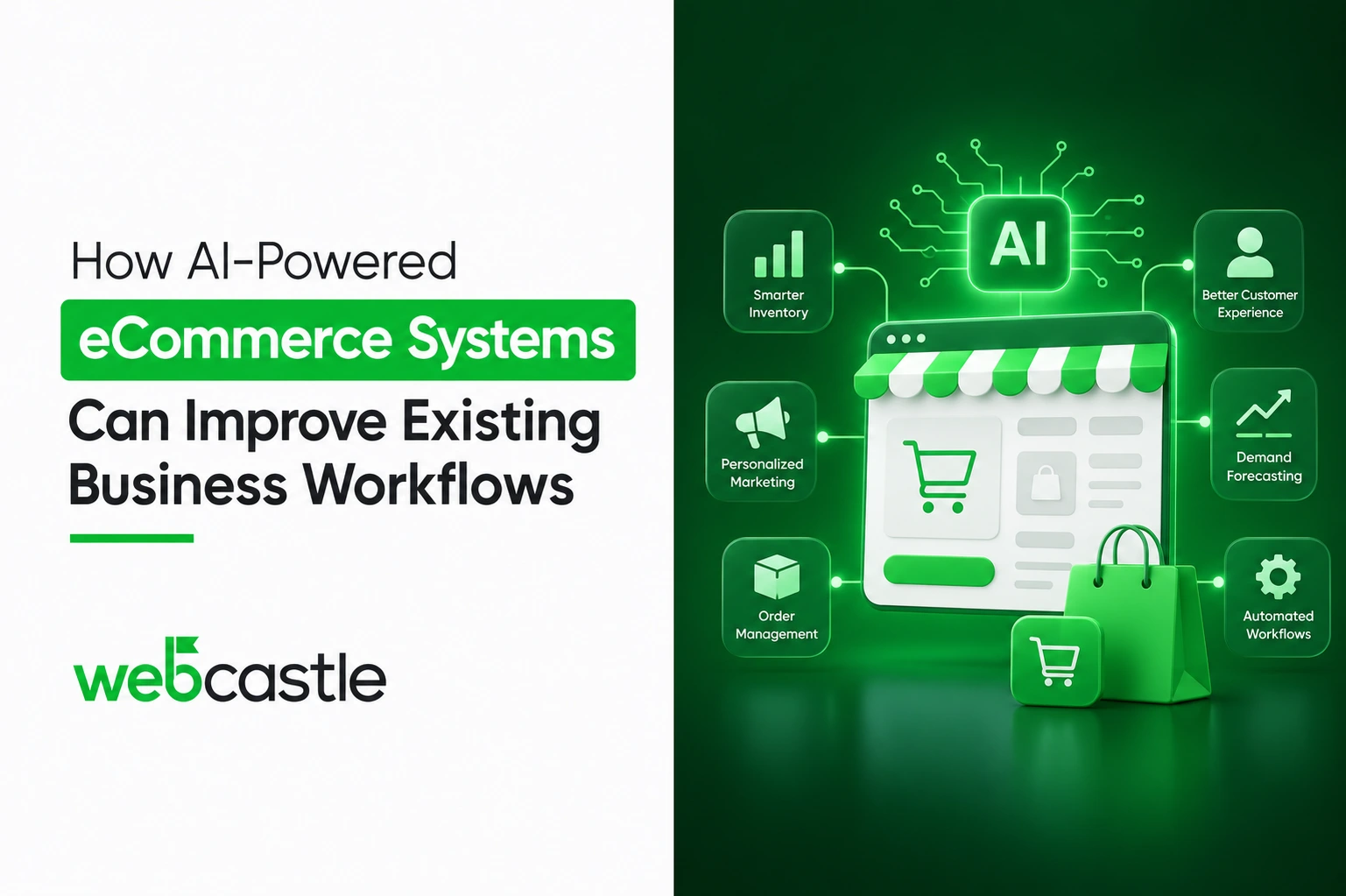



Online shopping is changing. For years, ecommerce websites have followed a simple process – customers browse products, add items to their cart, and complete a purchase. AI agents are now becoming part of this process. They can help customers find products, answer questions, track orders, and handle some shopping tasks with little human help.
This change is often called agentic commerce. It means customers can give an AI system a task, and the system can take several steps to complete it. For ecommerce businesses, this creates new opportunities but also changes what a website needs to provide.
What Are AI Agents in Ecommerce?
An AI agent is software that can understand a request, decide what needs to be done, and take action to complete a task.
On an ecommerce website, an AI agent could help a customer find the right product, check an order status, process a return, or compare different products. It could also work in the background by monitoring stock and alerting a business when products need to be reordered.
This is different from a basic chatbot that gives answers based on fixed questions and responses. An AI agent can understand the customer’s request, access relevant information, and take the next step based on the situation.
For example, instead of asking a customer to visit an order page and enter an order number, an agent could identify the order, check its current status, and provide the information directly.
Key Ways AI Agents Are Changing Online Shopping
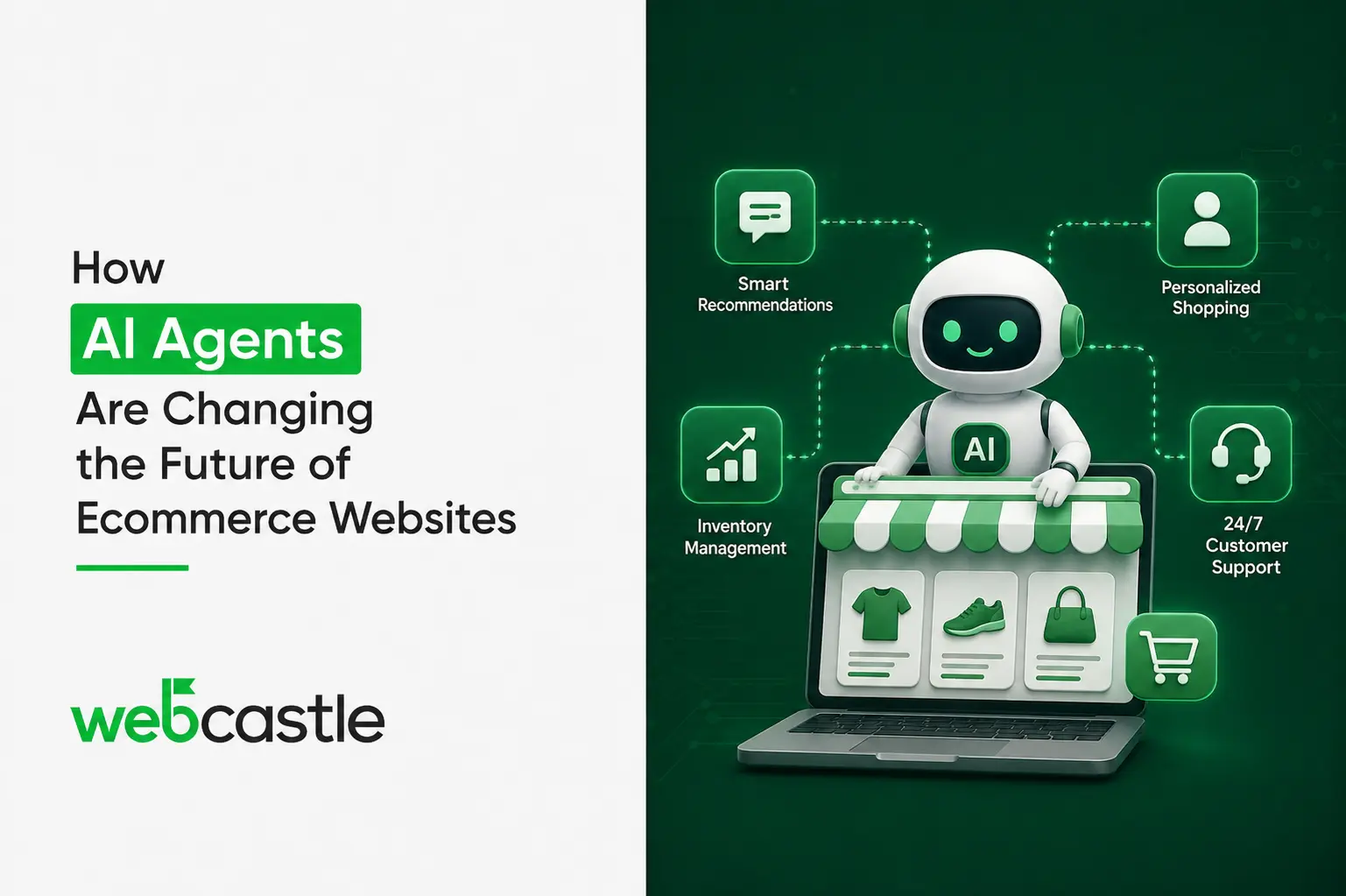
Personalized shopping experiences
AI agents can use information such as products viewed, previous purchases, and search activity to provide more relevant suggestions. Instead of showing the same recommendations to every visitor, an ecommerce website can show products based on what an individual customer is looking for.
This can also affect search results, product suggestions, and the type of content shown on a website.
Automated customer support
AI agents can answer common questions about orders, delivery, returns, product sizes, and product features. When an issue needs human attention, the conversation can be passed to a customer service representative.
This can reduce the number of routine questions handled by support teams and allow staff to spend more time on complex customer problems.
AI-powered product discovery
Customers do not always know the exact product name or search terms they need. They may describe what they want in a sentence, such as, “I need a waterproof jacket for hiking in cold weather.”
An AI agent can understand this request and find products that meet those requirements. This makes product search more conversational and can make it easier for customers to find suitable items.
Automated post-purchase support
AI agents can also help after a customer places an order. They can provide shipping updates, answer delivery questions, and help with return requests.
For example, if an order is delayed, an automated system could inform the customer about the delay instead of waiting for the customer to contact support.
Dynamic pricing and promotions
AI systems can analyse factors such as demand, stock levels, and competitor prices to help businesses decide when to change prices or promotions.
This needs to be managed carefully. Frequent price changes can affect customer trust, so businesses need clear pricing rules and proper checks before allowing automated systems to make these decisions.
How Ecommerce Websites Need to Adapt
Ecommerce websites are no longer built only for people who browse pages manually. As AI tools become more involved in product discovery and shopping, websites also need to provide information in a clear and structured way.
Product pages should have accurate product names, descriptions, prices, availability, specifications, images, and other important details. Structured data can also help systems understand information such as product prices, availability, reviews, and other product details.
The technical structure of a website is important as well. Slow pages, broken links, missing information, and inconsistent product data can make it harder for both customers and software systems to use the website.
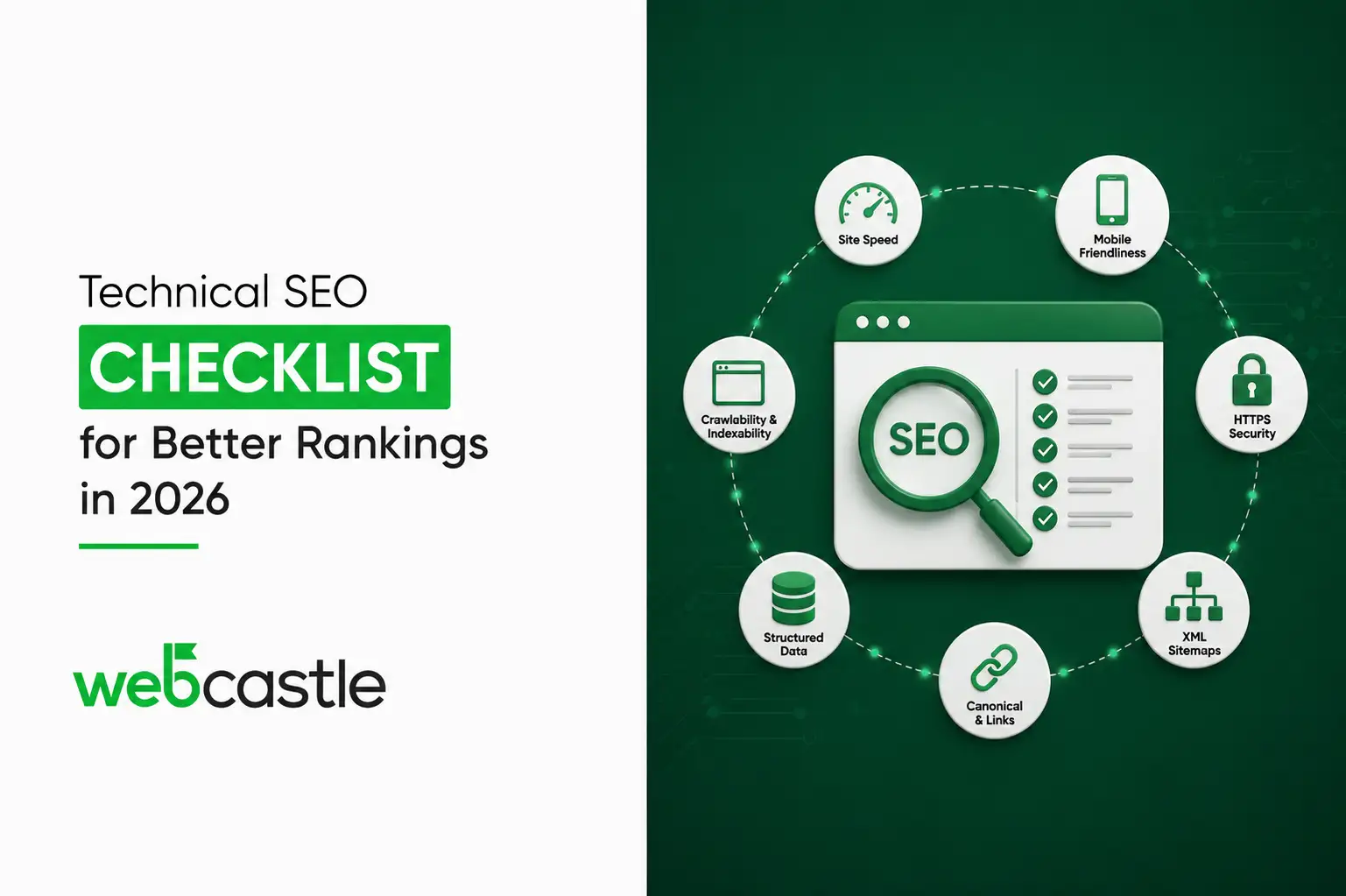
For ecommerce businesses, this means technical SEO and website development need to work together. A website should be easy to use, fast, well organised, and built around reliable product information.
Benefits of AI Agents for Ecommerce Businesses
AI agents can reduce the amount of time staff spend handling repetitive tasks. Questions about delivery, returns, product information, and order status can often be handled automatically.
They can also help customers find suitable products faster. When customers get useful answers and product suggestions without going through several pages, the buying process can become easier.
Another benefit is the information businesses can collect from customer interactions. The questions people ask can show what information is missing from product pages or where customers are having difficulty during the buying process.
For smaller businesses, this can help customer service teams manage a larger number of requests without adding staff for every increase in customer activity. Larger ecommerce businesses can use similar systems to manage customer questions across large product catalogues.
The Future of AI-Powered Ecommerce Websites
AI agents are likely to do more than answer questions. Customers may be able to give an agent a complete task, such as finding a suitable product, comparing available options, checking prices, and helping with the purchase.
For example, a customer could ask an agent to find a washing machine within a certain budget, with specific features and delivery requirements. The agent could then compare products and present suitable choices.
As these types of tools become more common, ecommerce websites will need to provide reliable and well-structured information that these systems can understand.
Businesses may also need to think about how their products appear when customers search through AI-powered shopping tools, rather than relying only on traditional search engines.
Building Websites That Are Ready for Agentic Commerce
As agentic commerce develops, website quality will become increasingly important. This is especially relevant in markets such as the UAE, where ecommerce businesses serve customers with different languages, preferences, and shopping habits.
Businesses looking for a web development company in Dubai should consider more than the visual design of a website. They should also look at website speed, structured data, product information, mobile usability, and how easily the website can connect with other tools and services.
WebCastle Technologies, one of the best web development company in Dubai, focuses on building websites with a strong technical foundation. This can help businesses prepare their ecommerce websites for new ways of search, product discovery, and online shopping.
As a leading ecommerce website development company in Dubai, we also consider mobile users and the needs of a diverse customer base. Clear navigation, accurate product information, fast loading times, and a simple checkout process remain important as new technologies are introduced.
Preparing a website for AI-assisted shopping does not mean adding an AI chatbot to every page. It starts with making sure the basic website structure, content, product data, and technical setup are reliable.
Also Read – How AI Search Selects Brands for Recommendations
Conclusion
AI agents are changing the way people can search for products, compare options, and complete shopping tasks. Ecommerce websites will need to support this change by providing clear product information, structured data, good website performance, and simple user journeys.
Businesses do not need to rebuild their entire website around AI. However, they should make sure their existing websites have a solid technical foundation and can work with new shopping tools as they develop.
As agentic commerce grows, ecommerce businesses that keep their product information accurate and their websites easy to understand will be in a better position to adapt to the way people shop in the future.