


Cloud migration sounds simple until you’re three months in, over budget, and half your applications won’t talk to each other. Most failures trace back to the same three things: weak planning, missing skills, and cost estimates built on hope instead of data. This piece breaks down where migrations go wrong, the specific traps businesses hit along the way, and what an experienced AWS consulting partner actually does differently. If you’re deciding whether to bring in outside help, here are the real decision points.
What Is Cloud Migration?
Cloud migration is the process of moving data, applications, and infrastructure from on-premises servers or another cloud provider to a platform like AWS.
Migration touches how your applications are architected, how your team works day to day, what your compliance obligations look like, and what your monthly bill actually adds up to once the migration is supposedly “done.”
Businesses migrate for cost savings, scalability, or to stop maintaining physical servers. Getting all three on the first attempt is rare.
Why Cloud Migration Projects Often Fail
Poor Planning and Assessment
Teams jump into migration without a full inventory of what they’re moving. No clear picture of application dependencies. No understanding of which workloads are cloud-ready and which ones need to be rebuilt before they go anywhere near AWS. What you get is a migration plan built on assumptions, not on an actual audit of the existing environment. That gap shows up later, usually at the worst possible moment.
Lack of Skilled Cloud Resources
AWS runs on its own architecture patterns, its own security model, and its own pricing logic. None of that transfers automatically from years of managing on-prem infrastructure. Hiring for AWS expertise takes months most businesses don’t have, so the migration gets handed to whoever’s willing to learn AWS on the job, live with production systems on the line.
Underestimating Costs and Timelines
Every migration budget looks reasonable on paper. Then data transfer fees show up. Then unused reserved instances start burning cash. Then “temporary” dual-running costs, where you’re paying for old infrastructure and new infrastructure at the same time, stretch on for months longer than planned.
The Most Common Cloud Migration Challenges
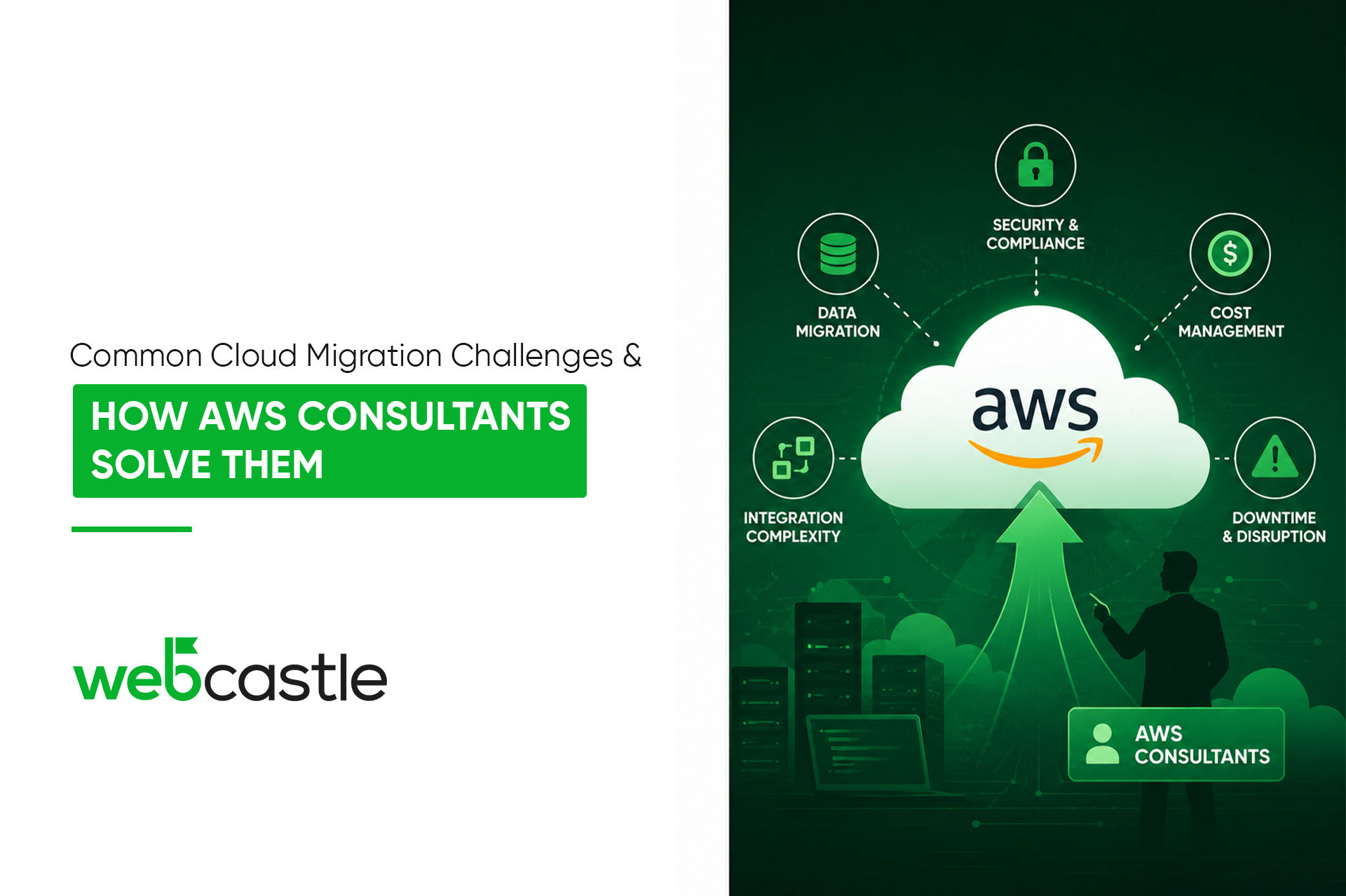
Data Security and Compliance
When moving data off-premises, one has to reimagine the encryption, access control, and audit trails from the ground up. For businesses in finance, healthcare, or any regulated industry, compliance requirements like HIPAA, PCI DSS, or GDPR don’t take a break during migration. They are as relevant to data in transit as they are to data at rest, and that is why businesses find themselves with a compliance issue as well as a migration bill.
Application Compatibility Issues
Legacy applications that were developed for an on-premises configuration are likely not to function as expected in the cloud without modifications. Others must be redesigned from the ground up. Some rely on hardware setups that aren’t offered by AWS. The whole reason for conducting a proper assessment first is to learn what to expect in advance of migration.
Downtime and Business Continuity
During infrastructure moves, businesses cannot sit idle while their infrastructure relocates. Each migration must include rollback capability, failover testing, and cutover windows, particularly for systems serving customers, where downtime is a direct loss of revenue.
Performance Bottlenecks
Lift-and-shift migrations, moving applications as-is with no optimization, often perform worse in the cloud than they did on-prem. Cloud infrastructure needs tuning. It doesn’t run well just because you copied it over.
Managing Legacy Infrastructure
Not everything belongs in the cloud on day one, and some legacy systems shouldn’t move until the rest of the environment is ready for them. That means businesses end up running hybrid environments during migration, and often for a long stretch after it. Most migration plans don’t budget for that complexity upfront, which is exactly why it becomes a problem later.
How AWS Consultants Overcome These Challenges
Creating a Tailored Migration Roadmap
Experienced AWS consultants conduct a thorough evaluation of the current situation before offering any suggestions. They map application dependencies and provide early warning of compliance needs.
Selecting the Right AWS Migration Services
There are several migration options available on AWS, including AWS Application Migration Service and AWS Database Migration Service, and the right choice depends entirely on the workload. Consultants select the appropriate service for the application.
Implementing Security Best Practices
Establishing IAM roles, encryption, network segmentation, and compliance controls are all critical and should be designed from the ground up, not after the migration is done. It costs less to implement a security measure from the beginning.
Optimizing Cloud Costs
Tools like AWS Cost Explorer and right-sizing recommendations help businesses avoid paying for capacity they don’t need. That means choosing between reserved instances, savings plans, and on-demand pricing based on actual usage patterns, not a guess made during the planning phase.
Continuous Monitoring and Performance Optimization
Migration is not a single event, and treating it as such is a mistake. Post-go-live monitoring, such as with AWS CloudWatch, is implemented by consultants to catch performance issues, unexpected cost spikes, or security anomalies after go-live, not just during the migration window itself.
Signs Your Business Needs an AWS Consulting Partner
Some indications that it’s time to call in the professionals:
- Your team has never run a cloud migration at this scale before.
- You’re in a regulated industry, and nobody can agree internally on what compliance actually requires.
- A previous cloud adoption attempt stalled or blew past the budget.
- You don’t have a clear answer for what happens to the legacy systems that can’t move yet.
- Nobody on the team can explain your current AWS cost structure.
If two or more of these apply to you right now, the cost of getting the migration wrong is higher than the cost of hiring help.
Key Benefits of Working with AWS Consultants
Why expert guidance beats going it alone
Uncertain about your migration plan? Sort that out before the project starts, not after. WebCastle, a leading AWS cloud consulting partner in Dubai, will assess your environment and build a roadmap around your applications and compliance needs. Contact us to begin with a full assessment.
Conclusion
The most common reason cloud migrations fail is that they’re perceived as a technical lift rather than a strategic project. Technical aspects matter. So does the planning, the cost modeling, and the security work that needs to be done before the first workload moves. An experienced AWS consulting partner brings pattern recognition earned from doing this repeatedly, and that’s exactly what most in-house teams are missing on their first attempt.