


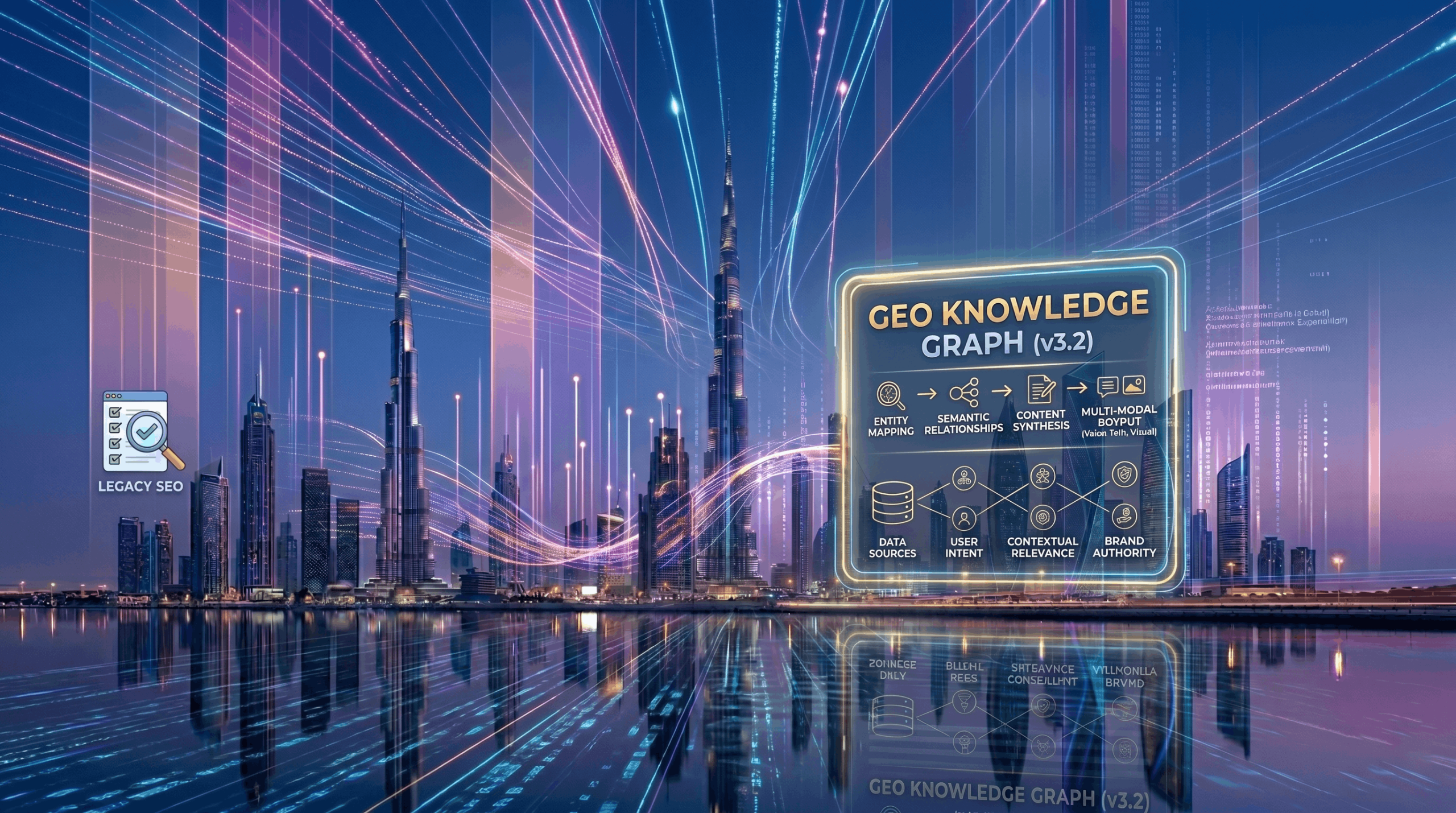
When Rankings Stop Bringing Visitors
Picture this: your website ranks #2 on Google for a key search term.Your SEO work paid off. But month after month, the traffic you expected never quite arrives. What went wrong?
Nothing went wrong with your ranking. What changed is what happens before users ever reach it.
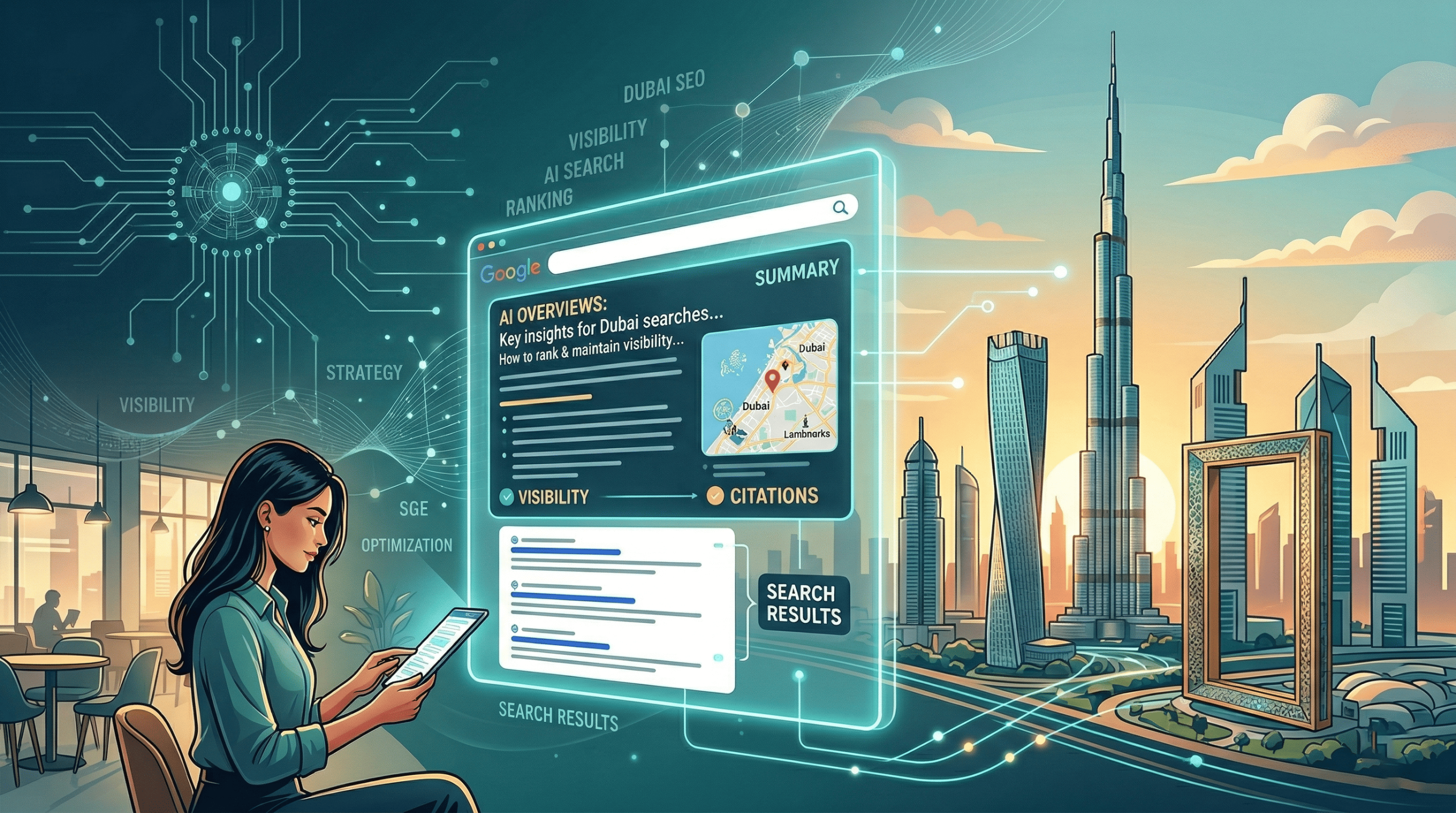
In 2026, many searches end on Google itself. AI summaries answer questions instantly, so users don’t click through.This shift is driving Zero-Click Visibility, where users get answers without visiting websites.
Search industry studies (including SparkToro and SimilarWeb) estimate that a growing share of queries now end without a click, as users get answers directly on the results page.
This is happening now—not a future trend. Visibility no longer guarantees traffic—AI often answers the question before the click happens. They are measurements of what is already happening to organic traffic across every industry.
The winners won’t be those spending more on ads or backlinks. They’ll be the ones AI chooses as trusted sources. That shift is called Generative Engine Optimization (GEO).
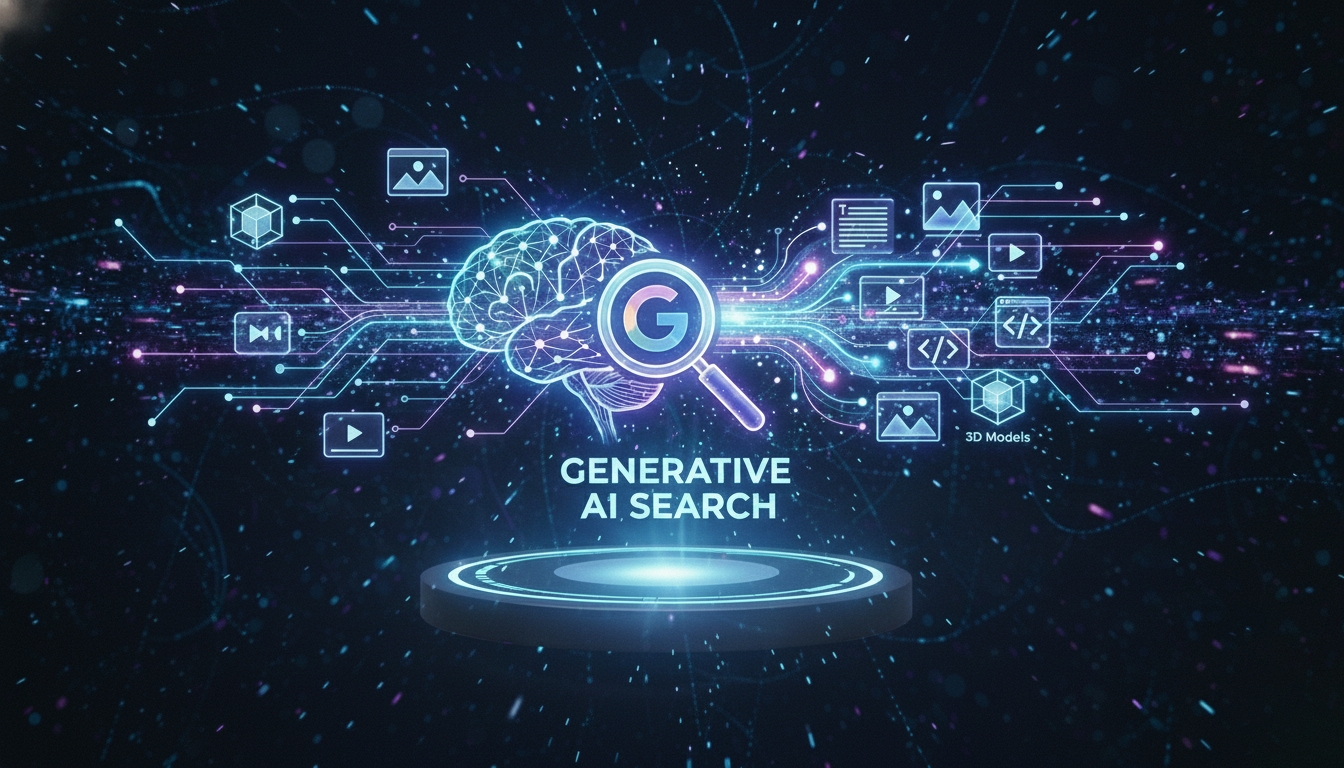
What Generative Engine Optimization Actually Means
According to Google, AI features like AI Overviews answer questions directly on the results page, so users don’t always need to click.
GEO can also be understood as LLM Optimization—preparing content for how AI models retrieve and present information.
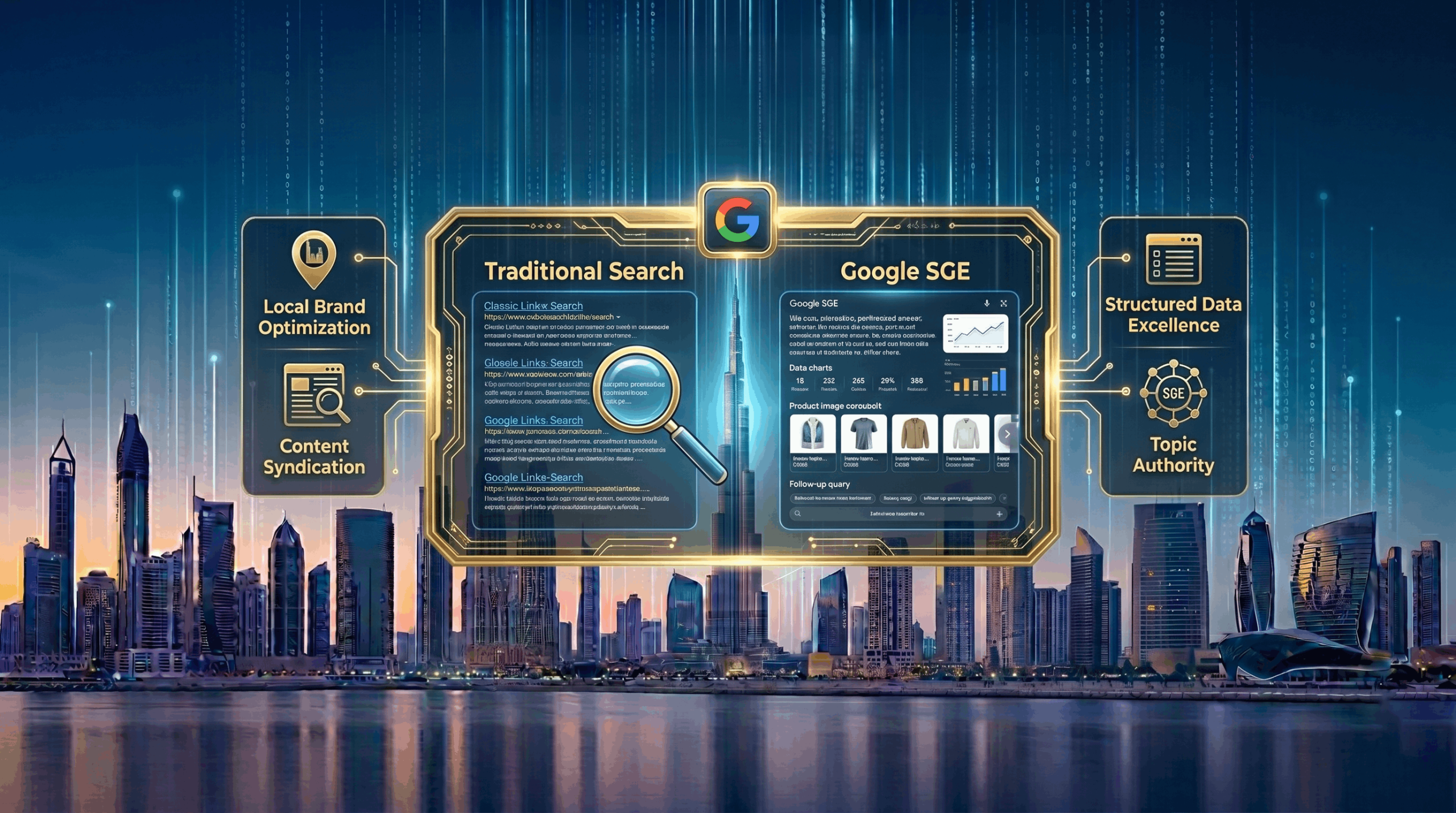
The distinction from traditional SEO matters. Old-school optimization put your page on a list and hoped the user clicked. GEO makes your content the substance of the answer itself. AI answers usually pull from just 2–7 sources—your goal is to be one of them.
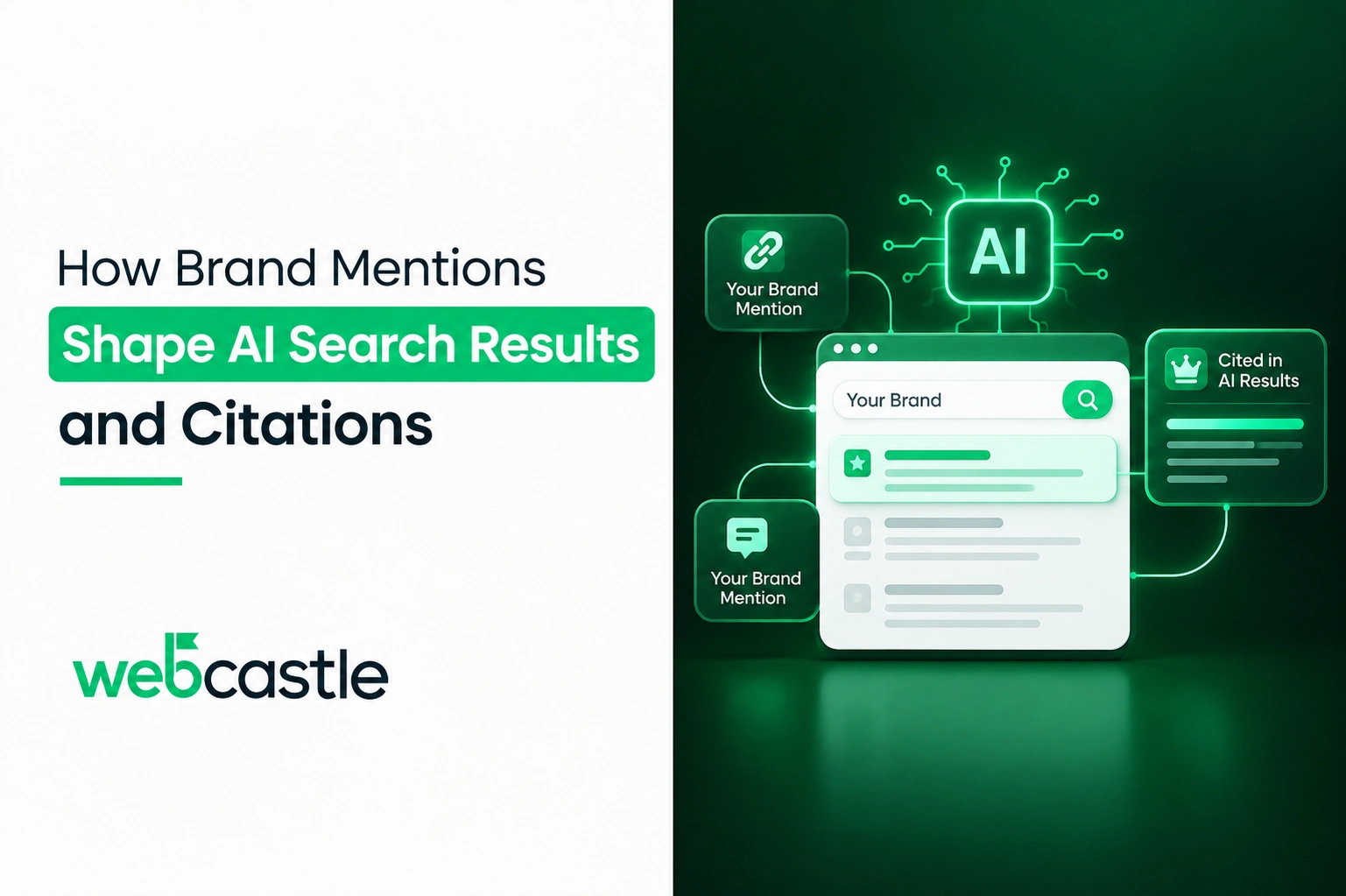
It’s not about gaming the system, but providing clear, trustworthy, well-structured content AI can use. Getting cited means more than visibility—it builds trust. The platform is, in effect, vouching for what you publish — a form of endorsement that no paid position or organic ranking can replicate.
When AI cites your content, it signals trust—not just shows a link. GEO goes beyond AEO. As AI search evolved, AEO was absorbed into GEO. Be the answer—not just a result.
GEO vs. Traditional SEO: Understanding the Core Differences
Both help people find your business—but they work in different ways.
Here’s how they differ:
| Traditional SEO | Generative Engine Optimization (GEO) |
| Aims for a position in a list of ranked links | Aims to be cited inside an AI-generated answer |
| Rewards keyword usage and backlink volume | Rewards structured, factual, and data-rich writing |
| Measured by click-through rates from SERPs | Measured by citation frequency in AI responses |
| Tuned to Google’s ranking signals | Tuned to how language models retrieve and verify content |
| Competes against ~10 other results per page | Competes for 2–7 citation slots per AI response |
One point worth emphasising: GEO does not replace what you have already built with SEO. Brands performing well in generative search tend to be those with strong foundations—often built with the support of a reliable web development agency Dubai—including fast-loading websites, solid domain credibility, and clear site architecture.
The Forces Reshaping Search in 2026
Several trends make this a key year for GEO. Early movers will have a lasting advantage.
AI search has crossed into mainstream use
Users are no longer experimenting with AI search tools — they are forming habits around them. ChatGPT processes around 2.5 billion prompts every day. Google AI Overviews now reach 200+ countries in 40+ languages.The UAE is right at the center of this shift.
AI-referred traffic is growing at pace
According to Previsible’s 2025 report, AI-referred traffic rose by 527% year-over-year. This growth shows the audience is large and still expanding—and people are making decisions based on AI answers, not just search results.
Research from Gartner and similar firms shows a clear shift: users are relying more on AI-generated answers than traditional search.
Top-three rankings no longer guarantee traffic
For informational search terms — the queries where most content marketing investment is concentrated — SEO research indicates that informational queries affected by AI Overviews have seen noticeable declines in click-through rates, even for previously top-ranking pages. Ranking well is no longer sufficient if the user’s question gets answered before they see your listing.
The next wave: agentic AI
Beyond answering questions, AI platforms are beginning to act as agents — browsing the web, comparing products, and completing tasks on a user’s behalf. OpenAI’s Operator, launched in early 2026, offers an early preview of this direction. As agentic search matures, content with machine-readable structure — clear pricing information, feature comparisons, step-by-step processes — will become a prerequisite for being included in AI-driven workflows, not just AI-generated answers.
How to Optimise for Generative Search: What the Evidence Shows
Many industry and academic studies show similar patterns in how AI selects and cites content.
A study by Princeton University, Georgia Tech, and IIT Delhi found clear trends in what AI is more likely to cite.
Their research, along with real-world campaign experience, highlights a consistent set of best practices.
- Answer before you elaborate. Content must lead with the answer. AI platforms that retrieve pages in real time evaluate the opening 200 words first. If your article takes three paragraphs to arrive at its main point, it is likely to be passed over. Write the conclusion first, then expand. Content must be structured for AI Readability, making it easy for systems to extract key information.
- Use data, not adjectives. Concrete numbers outperform vague claims. Replacing qualitative language — ‘highly effective’, ‘industry-leading’ — The Princeton–Georgia Tech–IIT Delhi study found that replacing qualitative language (‘highly effective’, ‘industry-leading’) with data can increase citation rates by around 32%.
- Include expert voices. Attributed expert statements carry significant weight. The same research found expert quotes can boost visibility by up to 41% . AI models treat attributed statements as high-trust signals — evidence that a human authority stands behind the claim.
- Implement schema markup. Structured data helps AI understand your content. Use simple schema like Article, FAQ, and HowTo to show structure. Also, make sure AI crawlers (GPTBot, ClaudeBot, PerplexityBot) aren’t blocked in your robots.txt.
- Keep content current. Fresh content gets cited more often. AI engines favour recency. Old content gets replaced by newer updates. Add a “last updated” date, refresh stats, and review key content at least twice a year.
- Be consistent everywhere. Consistent branding helps AI recognize your business. When your message stays the same everywhere, AI can find and present it more accurately. Inconsistent descriptions produce hedged or absent mentions. This consistency strengthens your Brand Impression, helping AI present your business with confidence.
- Guide AI crawlers intentionally. Your domain’s relationship with AI crawlers matters. Adding an llms.txt file — a lightweight guide telling AI systems which pages best represent your content — helps direct AI attention to your most authoritative material rather than spreading it across your entire site.
Why GEO Matters Specifically for Businesses in Dubai and the UAE
The UAE’s digital environment makes GEO not just relevant but strategically urgent for businesses here. Dubai’s internet penetration is over 99%, with strong AI search adoption. When users in the UAE ask tools like ChatGPT or Perplexity for recommendations, the results are shaped by GEO.
The companies that appear in those answers did not win their position through budget alone. They won it through content that AI systems can extract, trust, and cite. That is an opportunity for businesses of every size. Unlike many SEO companies in Dubai focused only on rankings, GEO focuses on being cited in AI answers.
GEO has a levelling effect that traditional SEO often lacks. Because AI platforms weight structured evidence and topical depth over raw link volume, a specialist agency with five deeply researched, well-structured articles can outrank a larger competitor with fifty generic ones. The quality of the argument matters more than the scale of the content operation.
Businesses across the UAE that act now stand to gain:
- Reach without the click.
Presence in AI responses, even when users never visit your site - Credibility by association.
Being cited signals trust to users - Compounding returns.
Over time, consistent mentions build Citation Authority, increasing your chances of being referenced by AI. - First-mover advantage.
Early adopters gain lasting visibility
GEO and SEO Work Best Together
A common concern is that GEO replaces SEO—but that’s a misunderstanding.
Traditional search is not disappearing. For transactional queries — someone looking to buy a product, book a service, or find a location — conventional search listings remain dominant. Local searches, navigational queries, and price comparisons all still drive significant click traffic. SEO serves those journeys well.
Where GEO matters most is in the informational space — the questions people ask when they are researching a decision, comparing options, or building understanding. AI answers have hit hardest here, and non-GEO content is already losing visibility.
In practice, GEO and SEO work together. Content written to perform in generative search — direct, structured, evidence-based, clearly attributed — also satisfies Google’s helpful content standards and tends to rank well in conventional results. You don’t have to choose—you need a partner who understands both.
How Webcastle Helps UAE Businesses Navigate This Shift
At Webcastle, we provide digital marketing services Dubai businesses rely on to stay visible in an AI-driven search landscape.
Our content and SEO teams combine regional market knowledge with the technical depth that GEO demands: content architecture, schema implementation, AI crawler management, entity consistency, and the kind of structured, evidence-led writing that generative platforms select and cite. Whether your business is starting from scratch or looking to extend an existing SEO strategy into GEO territory, we build the systems and content that position you to be found — in AI responses as much as in organic rankings.
The window for first-mover advantage in GEO is open now. The brands investing in this discipline in 2026 will be the ones AI systems default to citing in 2027 and 2028. Citation authority, like domain authority before it, compounds over time.
Sources include industry research reports, academic studies, and platform data from AI search tools.
Ready to build your GEO Services Dubai strategy?
Visit Webcastle UAE to speak with our team about building an integrated GEO and SEO strategy tailored to your market, your audience, and your growth goals.