





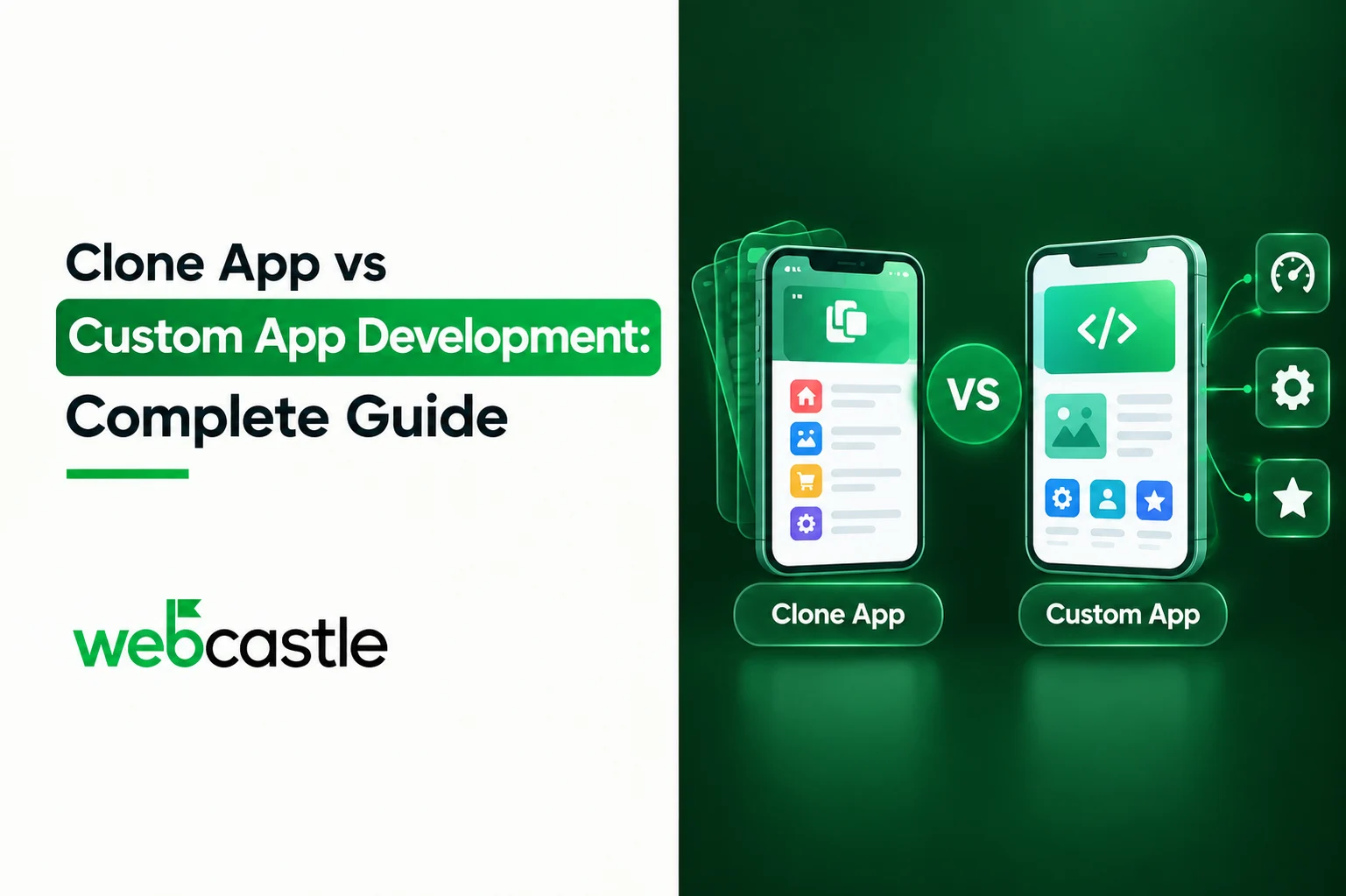
When starting an app project, you usually have two choices. You can use a ready-made app model, or build an app from scratch based on your needs. Clone apps and custom apps offer these two options, and each one can work better for different types of businesses.
Choosing the wrong option can cost a lot. Building a custom app too early can waste money on features that customers may not even use. On the other hand, a clone app may not give you enough freedom to make changes when your customers need something different.
This guide explains both options, compares them, and helps you decide which one fits your stage, budget, and goals. It also looks at a middle option: start with a clone app and move to a custom app later when your business grows.
What Is a Clone App?
A clone app is a ready-made application that recreates the core features and workflow of a successful app. A taxi booking app modeled on Uber is one example, a rental marketplace modeled on Airbnb is another. Development companies build these once, package them as reusable products, and sell them to multiple businesses that can then rebrand and configure them.
Reputable clone products follow an existing business model and familiar user flow, but use their own code, design, and branding.
Using logos, trademarked names, or proprietary code from the original app can create legal problems, so ask the vendor exactly what is included in the package.
A typical clone app package includes a customer app, a driver or vendor app, an admin dashboard, payment integration, push notifications, and basic reporting. Setup is mostly about configuration, such as adding your logo and colors, setting the service area and payment gateway, and defining commission rules.
What Is Custom App Development?
Custom app development means building an app around your business from the first line of code. A team starts with discovery, where they work out who your users are, what problem you solve, and how people will move through the product. Then comes design, architecture, development, testing, and launch.
Every feature exists because you decided it should. You choose the tech stack, shape the interface, connect the app to your existing systems, and (if your contract says so) own the source code outright. That freedom is the main draw. The price of it is more money, more time, and more decisions on your plate.
Clone App vs Custom App: Key Differences
| Factor | Clone App | Custom App |
|---|---|---|
| Upfront cost | Lower, often a fixed license or package price | Higher, based on scope and team hours |
| Time to launch | Weeks in many cases | Usually several months or more |
| Customization | Limited to what the script allows | Highly flexible and built around your requirements |
| Uniqueness | Looks and works like similar apps | Built around your own business model and brand |
| Scalability | Depends on how the script was built | Can be designed around your expected growth |
| Source code | Depends on the vendor and license | Yours, if the contract says so |
| Maintenance | Vendor updates, if provided | Your team or development partner |
| Main risk | Outgrowing the product | Spending too much before proving demand |
Cost and speed get the most attention, but customization matters most. A clone gets you to market fast, and the trouble starts when a customer asks for something the script wasn’t built to do. Each workaround adds cost and makes the codebase harder to change.
Scalability deserves a hard look too. Some clone products handle thousands of users comfortably, and others slow down well before that. Ask any vendor for evidence, such as a live client running at the volume you expect.
When Should You Choose a Clone App?
A clone app is a good choice when you want to test a business idea that people already know. For example, people are already used to ordering groceries, booking rides, and renting equipment through apps. You don’t need to explain how these apps work. Instead, you can focus on offering a good service in your city or to a specific group of customers.
It also fits tight budgets and short timelines. A small team with limited funding can get a working product in front of real users while a custom build is still in design. Real usage tells you more than any planning document, and you get it sooner.
Clone apps work well when your business does not need special technology to stand out. You can focus on building local partnerships, offering better service, keeping prices fair, or reaching more customers through marketing. For example, a food delivery startup can use a clone app and focus on building good relationships with restaurants in its city.
Clone apps can also be a good choice for founders who do not have a technical background. They can start with a ready-made app instead of spending a lot of time planning features, designing screens, and testing the app from scratch.
Before buying a clone app, check the vendor carefully. Ask for a live demo and contact some of their existing clients. Find out whether you will get the source code, how they handle updates and bug fixes, and what support will cost after launch. A cheap app is not worth the money if the vendor disappears and leaves you without help.
When Is Custom App Development the Better Choice?
Choose a custom app when the app itself makes your business different from others. For example, your app may have a unique way of matching customers with service providers or features designed for a specific industry. A ready-made clone app may not support these needs, so a custom app gives you more freedom to build the features your business requires.
Complex requirements point the same way. Businesses that need to connect with an ERP, a CRM, medical devices, warehouse hardware, or legacy software usually can’t force those pieces into a prebuilt product. The same goes for regulated fields like healthcare and finance, where data handling rules shape how the app must be built from the start.
Scale is another factor. If you expect heavy traffic or a large user base soon after launch, building the architecture for that load from day one costs less than fixing a struggling system later.
Ownership matters as well. Investors and acquirers often want to see proprietary technology, and a customized white-label script can look thin in due diligence. If you plan to raise money or sell the company, owning your code is a real asset.
Finally, custom is the natural next step for a business that has already proven demand. If you have paying users, clear feedback, and a growing list of requests your current tool can’t handle, the case for a proper build is strong.
Can You Start With a Clone App and Move to a Custom App Later?
Yes, and plenty of businesses do exactly that. A clone gets you live quickly, you learn what customers want, and you spend real budget on a custom build only after the market has answered your main question.
The move goes smoothly only if you plan for it from the beginning.
Get the source code, or at least full access to your data. Before you sign, confirm your database can be exported in a usable format and that the app exposes APIs you can reuse. If the vendor keeps everything locked inside their system, your exit gets expensive.
Keep a running record of what your users ask for and what the script can’t do. That list becomes the specification for your custom version, and it will be far more accurate than anything you could have written before launch.
Resist the urge to patch the clone heavily. Small tweaks are fine. Deep changes to a codebase you didn’t design create technical debt that follows you into the rebuild.
When the time comes, migrate in phases if you can. Rebuild the most important features first, run the old and new systems side by side for a while, and move users over gradually. Tell customers about interface changes ahead of time so the switch doesn’t confuse them.
Set a trigger in advance. For example, decide that when workarounds and vendor limits cost more per month than a rebuild would, you start the custom project. That keeps the decision tied to numbers instead of frustration.
Which App Development Approach Is Right for Your Business?
Before making a decision, list the features your app needs and compare them with a clone app demo. If the demo covers most of your requirements without major changes, a clone app may be enough for now. But if it lacks features that make your business different, a custom app may be the better option.
WebCastle Technologies, one of the top mobile app development company in Dubai, can help you compare these options, understand your technical needs, and choose an approach that fits your business goals and budget.
Conclusion
Clone apps and custom apps serve different needs. A clone app is faster and cheaper to build, and it works well when you want to use a business idea that is already successful. A custom app takes more time and money, but you have full control over the app, its features, and future growth.
Neither choice is permanent. Many businesses launch with a clone app, gather real feedback, and build a custom app once they know exactly what to build. Match the approach to where your business stands today, choose your vendor or development team with care, and keep your data portable so the next step stays open.
Related Blogs

12 October 2026
05 October 2026
29 September 2026
17 September 2026
11 September 2026
04 September 2026
28 August 2026
24 August 2026
18 August 2026
12 August 2026
05 August 2026
27 July 2026
21 July 2026
14 July 2026
07 July 2026
03 July 2026
26 June 2026
22 June 2026
12 June 2026
09 June 2026
04 June 2026
26 May 2026

19 May 2026

14 May 2026
08 May 2026
04 May 2026
20 April 2026

15 April 2026
30 April 2026

22 April 2026
08 April 2026

17 March 2026
12 March 2026
09 March 2026
06 March 2026
04 March 2026

26 February 2026

17 February 2026

19 February 2026

17 February 2026

13 February 2026

23 January 2026
By WebCastle

23 January 2026
By WebCastle
22 January 2026

19 January 2026
By WebCastle

19 January 2026
By WebCastle

22 December 2025

19 December 2025

18 December 2025

17 December 2025

15 December 2025

26 November 2025

20 November 2025
04 November 2025

23 October 2025
14 October 2025

10 October 2025
30 September 2025

25 September 2025

22 September 2025

16 September 2025

12 August 2025

08 August 2025

17 July 2025

19 June 2025

16 June 2025

16 June 2025

09 June 2025

27 May 2025

13 May 2025

09 May 2025

06 May 2025

05 May 2025

17 April 2025

15 April 2025

25 March 2025

20 March 2025

12 March 2025

07 March 2025

26 February 2025

24 February 2025

12 February 2025

04 February 2025

27 January 2025

22 January 2025

15 January 2025

10 January 2025

10 January 2025

27 November 2024

27 November 2024

20 November 2024

20 November 2024

04 November 2024

03 October 2024

22 July 2024

01 July 2024

27 May 2024

22 May 2024

22 May 2024

15 April 2024

27 February 2024

31 January 2024

31 January 2024

30 January 2024

26 January 2024

18 January 2024

17 January 2024

12 January 2024

11 January 2024

29 December 2023

28 December 2023

22 December 2023

19 December 2023

15 December 2023

14 December 2023

08 December 2023

07 December 2023

28 November 2023

28 November 2023

27 November 2023

22 November 2023

22 November 2023

16 November 2023

15 November 2023

10 November 2023

07 November 2023

03 November 2023

30 October 2023

20 October 2023

27 September 2023

27 September 2023

05 September 2023

05 September 2023

01 August 2023

01 August 2023

20 July 2023

28 June 2023

24 May 2023

19 May 2023

04 April 2023

13 January 2023

22 December 2022

25 November 2022

04 November 2022

27 September 2022

26 September 2022

27 August 2022

26 August 2022

28 July 2022

21 July 2022

30 June 2022

28 June 2022

13 May 2022

19 April 2022

15 February 2022

16 December 2021

23 August 2021

24 July 2021

22 June 2021

21 May 2021

16 April 2021

15 February 2021

07 January 2021

12 November 2020

14 September 2020

28 July 2020

19 May 2020

14 February 2020

02 December 2019

17 October 2019

13 September 2019

18 September 2019

17 November 2017

14 March 2018

24 May 2018

02 February 2018

14 September 2018

