


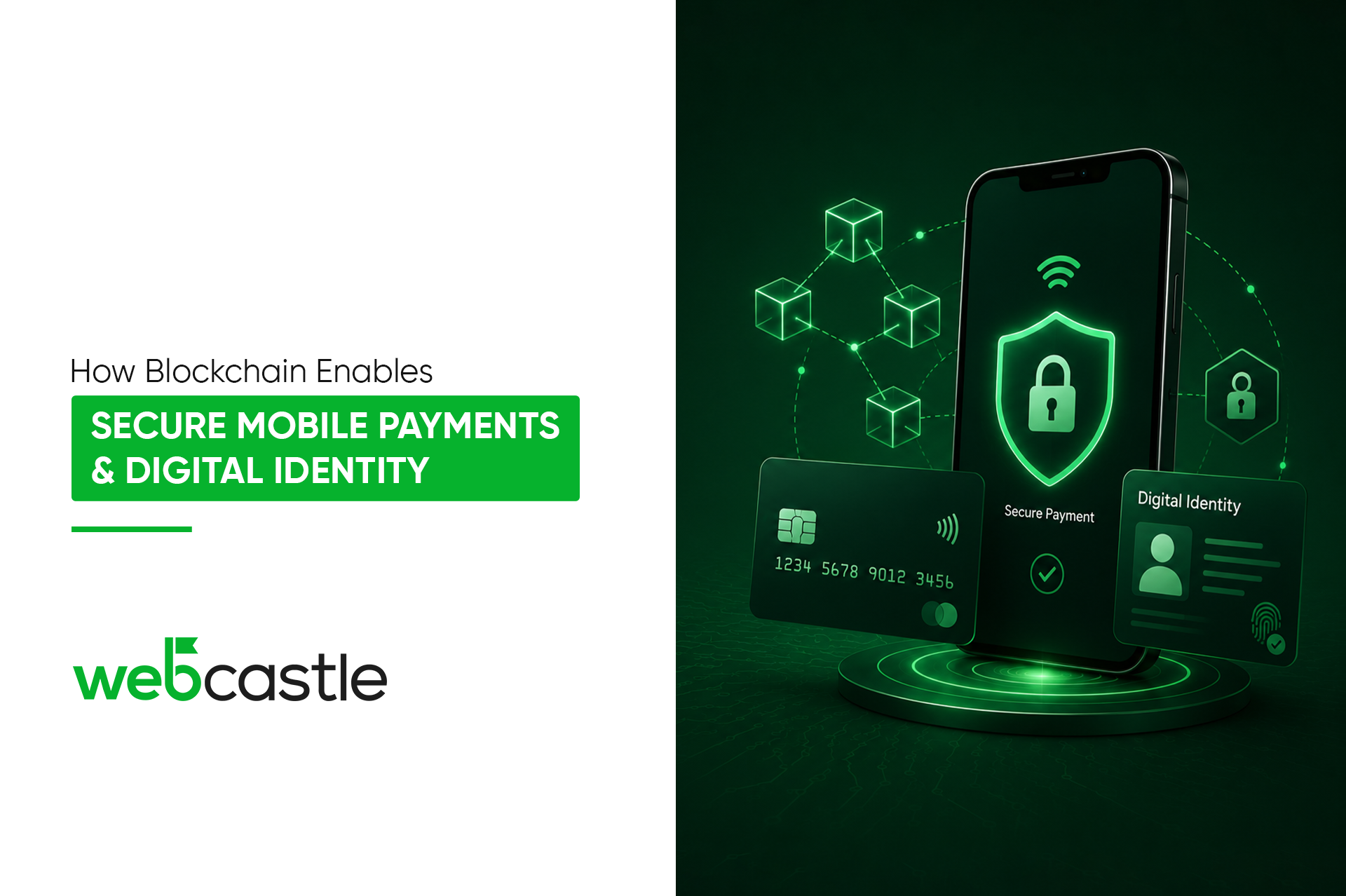
As mobile payments grow, businesses need stronger blockchain security for secure digital payments. Centralized payment systems and identity databases depend on one company holding the master copy of your data, which makes them a single target. Breach that target and millions of records go with it. Blockchain doesn’t patch this weakness with another layer of security. It removes the single target altogether.
This isn’t a distant concern for companies building mobile products. Blockchain mobile payments are changing how businesses process transactions and verify user identities.
Understanding Blockchain Technology
Blockchain is a shared digital ledger that stores the same records across multiple computers instead of one central system, helping improve blockchain security by reducing reliance on a single centralized database. Every new transaction gets bundled into a block, checked by the network, then chained to the block before it. Changing past records would require rewriting every subsequent block and gaining control of the network’s consensus, making it computationally impractical on secure blockchain networks. This is one of the key reasons blockchain differs from traditional centralized databases.
This design offers three key advantages: transparency, immutability, and decentralization.
How Blockchain Enables Secure Mobile Payments
Secure and Encrypted Transactions
A cryptographic signature accompanies every blockchain transaction, proving the sender approved the payment without handing account details to everyone else in the chain. A user’s financial information never sits in one central database, exposed and waiting. The network checks it through consensus instead of one administrator’s word.
Faster Cross-Border Payments
International transfers usually bounce through several banks before they land, and each stop adds time and fees. Blockchain skips most of those middlemen. Money moves directly between sender and receiver, often settling in minutes, regardless of which countries are involved.
Reduced Fraud and Chargebacks
Confirmed blockchain transactions cannot be altered, reducing chargeback fraud. Every transaction also leaves a permanent, tamper-proof trail, so sorting out a genuine dispute becomes far less of a headache.
Lower Transaction Costs
Fewer banks and processors standing between two parties means fewer fees stacked on each transaction. Small payments and cross-border transfers feel this the most, since traditional processing fees can quietly eat away a large chunk of what’s actually being sent.
How Blockchain Supports Digital Identity
What Is Digital Identity?
Name, date of birth, government ID, biometric data, credentials: that’s your digital identity in a nutshell. Right now it’s scattered across dozens of company databases, each guarding it with its own standards and each a potential breach waiting to happen.
Decentralized Identity Verification
Blockchain-based digital identity solutions flip this model. Rather than a bank or government office holding your entire identity file, you keep your own verified credentials in a digital wallet. When a service needs proof of who you are, it checks a cryptographic proof, not your actual documents. That’s the core idea behind self-sovereign identity: you control your data, not the institutions that used to warehouse it.
Enhanced Privacy and User Control
You control what information you share. A landlord might only need proof of income, not your entire financial history. Blockchain identity systems make that kind of selective sharing possible.
Protection Against Identity Theft
Centralized databases make tempting targets for exactly this reason: breach one, expose millions. Decentralized identity takes that target off the table. A breach of one service does not expose a user’s entire digital identity.
Benefits of Blockchain for Businesses and Users
Every transaction and identity verification is recorded on an immutable ledger, strengthening blockchain security. Users also notice when their data isn’t sitting in one vulnerable pile, and that noticing tends to build trust, which brings people back to the platform.
Regulators increasingly require verifiable records for AML and KYC checks. Blockchain supports compliance by maintaining an auditable transaction history. Put it all together, faster settlement, fewer failed payments, simpler ID checks, and the result is an experience that just feels smoother.
Challenges of Implementing Blockchain
Public blockchains may not handle high transaction volumes efficiently, so businesses should assess scalability. Crypto and digital identity regulations vary by country, requiring market-specific compliance.
Almost no business starts from zero, either. Wiring blockchain infrastructure into existing banking systems, CRMs, and internal databases takes real planning and often some custom middleware. On top of that, specialized expertise doesn’t come cheap, so businesses need to see a clear return before committing budget to it.
Best Practices for Blockchain Integration
Not every payment or identity problem needs blockchain thrown at it. Start by finding where its real strengths, security, transparency, decentralization, actually solve something, rather than adding complexity nobody asked for. Public, private, and permissioned blockchains serve different needs, with permissioned networks often best for regulated financial data.
Loop in legal and compliance teams from day one, not once development is already underway, especially for identity work where data protection laws vary sharply by country. And plan for growth before launch, since retrofitting scalability into a live platform is a much harder job than building for it from the start.
Businesses in Dubai can benefit from partnering with an experienced mobile app development company in Dubai to implement these features effectively.
The Future of Blockchain in Mobile Payments and Digital Identity
Momentum is building on both fronts. Payment providers are testing blockchain rails for cross-border settlement, while several governments are piloting blockchain digital identity systems to improve secure identity verification. As standards catch up, blockchain will likely stop being a nice-to-have and start being expected in mobile payments and identity verification, much the way encryption quietly became a baseline requirement for any serious app.
Conclusion
Blockchain is becoming an important technology for improving blockchain security, enabling secure digital payments, and supporting blockchain-based digital identity solutions.
If your business is figuring out where blockchain fits into your mobile payments or digital identity strategy, our team can help you work out the right use case, platform, and rollout plan. Get in touch with WebCastle Technologies to start the conversation.
Ready to build secure blockchain-powered mobile solutions? Contact WebCastle Technologies today at +971 56 403 3522 to discuss your project and get started.